
The Issue on Campus
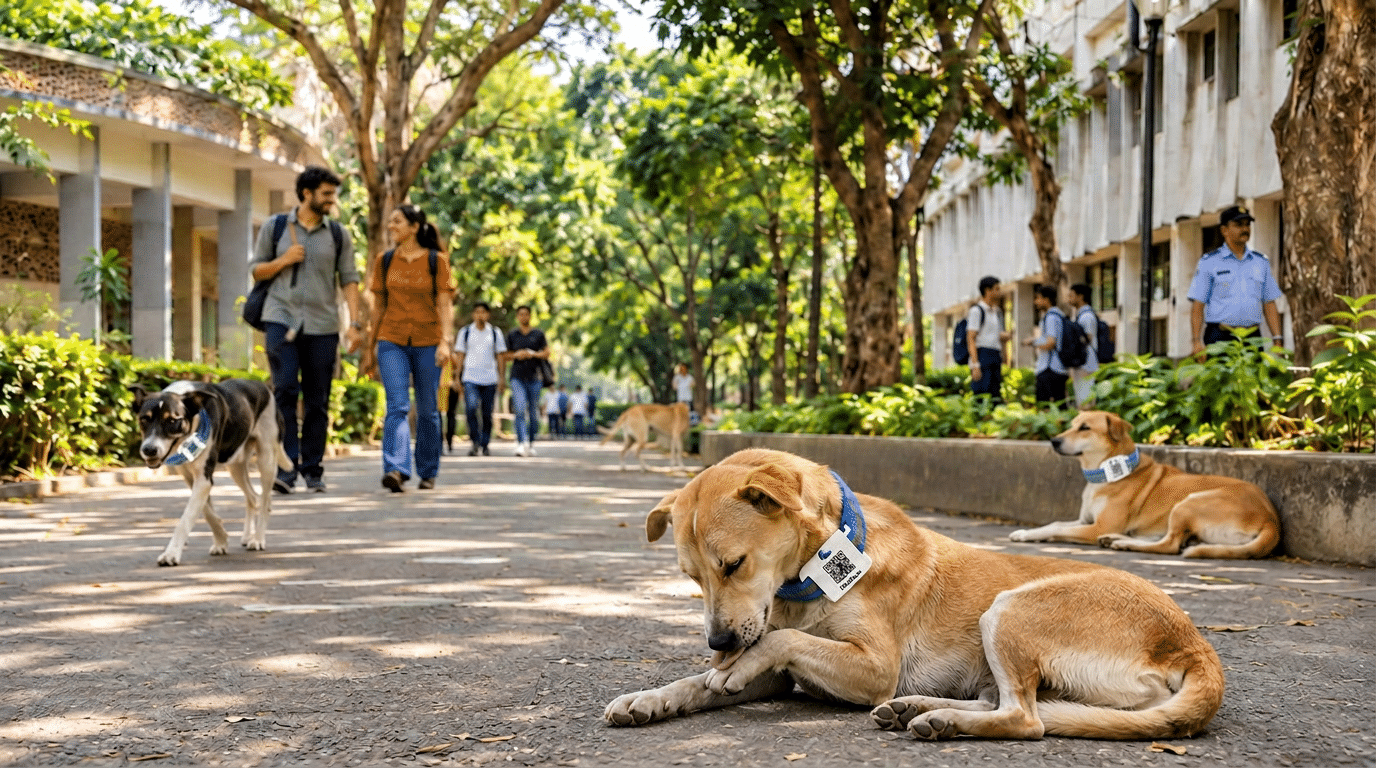
The issue of free-roaming dogs on the IIT Bombay Powai campus had been a growing concern for some time. While several students, faculty members, staff and caregivers were already actively involved in looking after the animals, one challenge remained: there was no single, reliable ecosystem that brought all the stakeholders together.
It was difficult to know exactly how many dogs were present in different parts of the campus, which animals had been vaccinated or sterilised, who their caregivers were, what medical treatment they had received, and where recurring areas of concern existed. As the Convenor of the Human-Animal Conflict Management Committee (HACMC) at IIT Bombay, I felt that we needed to move towards a more systematic and coordinated approach.
Finding IndieCare AI
That was when I came across IndieCare AI Solutions Private Limited, a social enterprise focused on using technology and better coordination to address the challenges associated with free-roaming animal management. I was particularly interested in their work on India's first AI-assisted stray dog enumeration project with Panvel Corporation and the concept at the heart of their platform a digital identity in the form of a "Dog Aadhaar", for every identified animal.
The idea was simple but powerful. Using a photograph, each dog could be identified and given an individual digital profile containing information such as its location, caregiver, vaccination and sterilization status, medical history and other relevant details. Instead of information being scattered across different individuals, the objective was to create a common system that could be accessed and updated by the people involved in the animal's care.
IndieCare AI's broader vision is to bring government authorities, NGOs, veterinarians, caregivers and citizens onto a common platform, making information easier to access and records easier to maintain. The startup has also been incubated by the SMILE Council of the Brihanmumbai Municipal Corporation (BMC) and the Society for Innovation and Entrepreneurship (SINE), IIT Bombay.
I had the opportunity to discuss this approach at length with Mr. Manohar Bidaye, Mentor & COO of IndieCare AI Solutions. Our discussions also gave me a deeper understanding of the complexity of the issue through his experiences of interactions with various veterinarians, animal caregivers, municipal officials and animal welfare organisations.
Enumeration and Digital Profiles
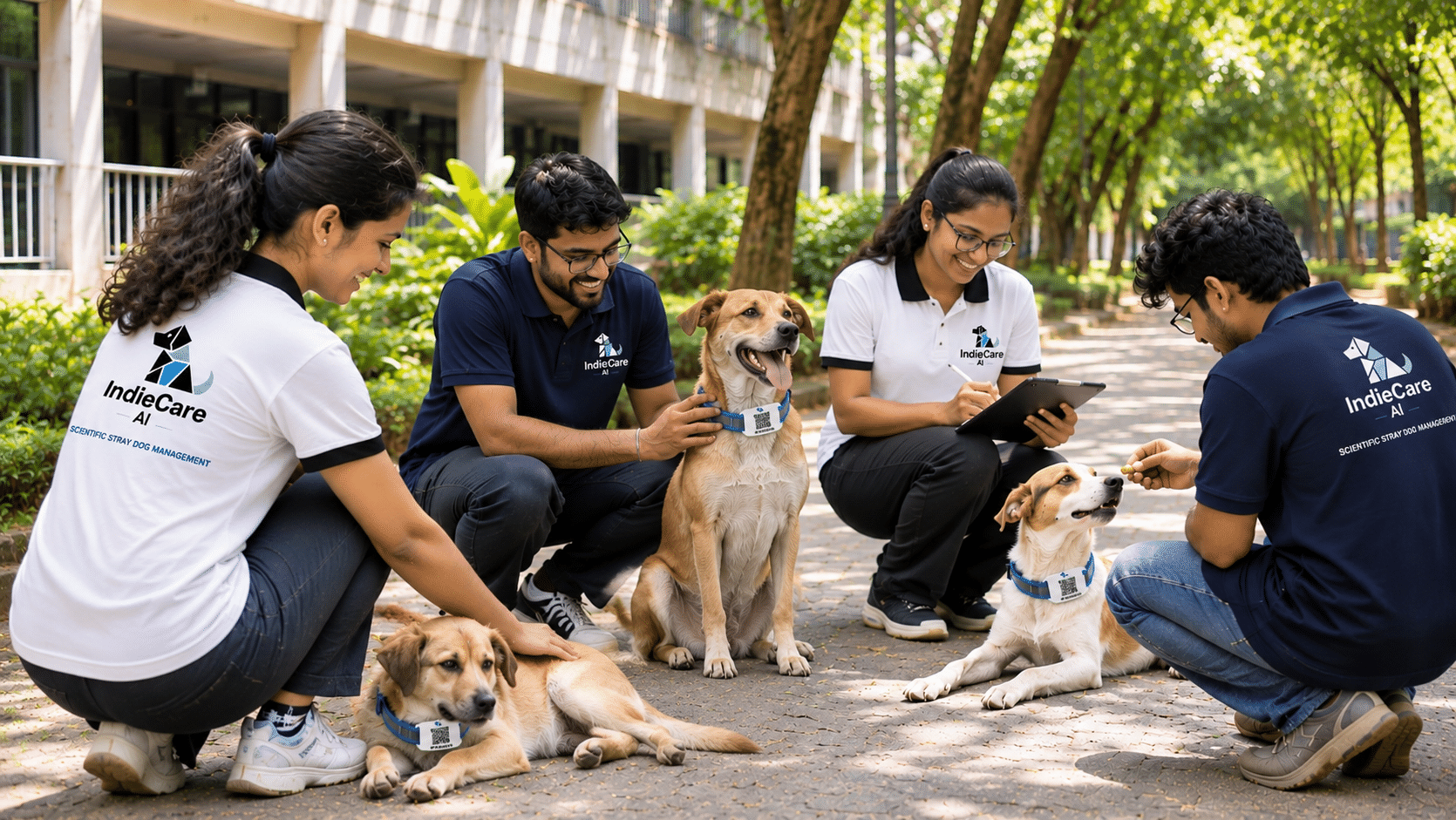
Following these discussions, we began the work at IIT Bombay with a systematic enumeration of dogs and cats across the campus. The animals were photographed, identified and mapped across different parts of the campus including academic areas, residential areas, hostels, the lakeside, hill areas and other locations. This exercise was carried out with the support of our IIT Bombay caregivers and students along with IndieCare AI field researchers, whose involvement was critical in identifying animals and understanding the realities on the ground.
Once an animal was identified, it could have its own digital profile. Vaccinations, sterilization, deworming and other medical interventions could then be recorded against that profile. The caregivers and veterinarians could use the system to coordinate care, while information about recurring complaint areas could be captured and examined more systematically.
Behaviour and Feeding
An important part of the initiative was also to understand animal behaviour. Human–animal conflict is often not simply about the presence of animals. It can arise from fear, unfamiliarity, inappropriate interactions, feeding practices or a lack of understanding of animal behaviour. By identifying individual dogs and understanding their behaviour, we could also identify animals that might require behavioural support and involve trained behaviourists wherever necessary.
Feeding practices were another area where greater structure was useful. Rather than allowing feeding to become a source of conflict, the objective was to encourage responsible feeding practices, with attention to suitable locations, routines and the needs of the animals.
The Wider Campus Community
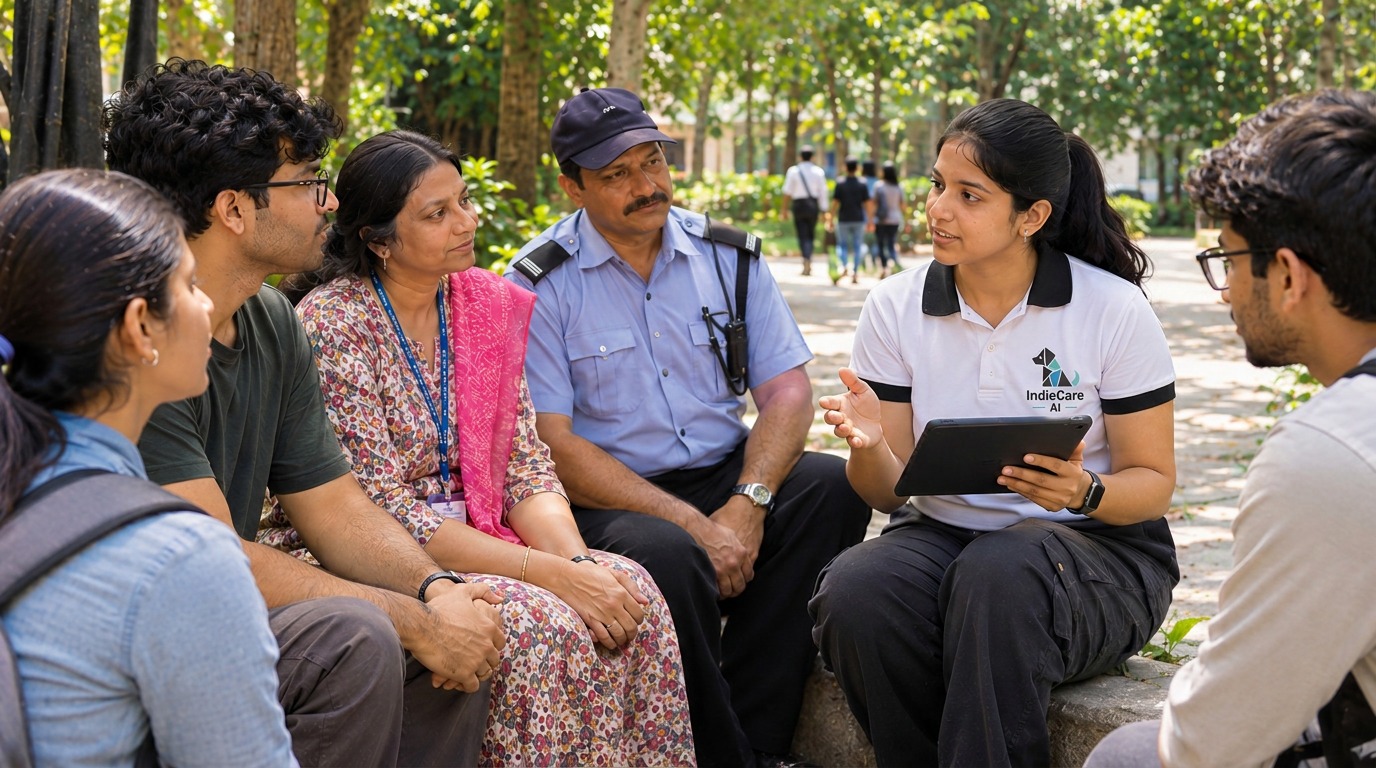
Equally important was the need to involve the wider campus community. The students, faculty and staff interact with animals regularly, sometimes without understanding how dogs interpret human behavior. Encouraging people to understand animal behaviour and learn how to interact with dogs safely and responsibly can go a long way towards reducing fear, misunderstandings and unnecessary conflict.
More than Counting Stray Dogs
For me, therefore, this initiative with IndieCare AI is about much more than simply counting stray dogs.
It is about creating a system in which every identified animal can have a record, every intervention can be documented, recurring concerns can be understood, and the people involved in animal care can work together through a shared information ecosystem.
Technology by itself cannot solve human–animal conflict. But technology, when combined with responsible caregiving, veterinary expertise, behavioural understanding and community participation, can help us build a much more organised approach.
Our Vision
Our vision at IIT Bombay is to bring technology, data and people together to create a more coordinated and humane framework for managing free-roaming animals on campus. This initiative supported by IIT Bombay management has not only resulted in reduction in the dog population but also making IIT Bombay community dogs happy and healthier.
If we can demonstrate that such a system can work effectively in a large and diverse campus environment like IIT Bombay, it could potentially provide a useful model for other educational institutions, residential communities and cities looking for more organised approaches to human–animal coexistence.
Ultimately, the objective is not merely to manage animals better. It is to build a campus where people and animals can coexist with greater understanding, responsibility and trust.
November 2026

Professor Balchandra Puranik
Former Head - Department of Mechanical Engineering at IIT Bombay
Former Convenor of the Human-Animal Conflict Management Committee (HACMC) at IIT Bombay